
Two figures from spring 2026 tell the same story from opposite ends. Málaga city hit a fresh all-time high of around €3,755/m² — and in the very same quarter, sales across the province fell by 9.3%. Prices up, transactions down: the Costa del Sol market is turning.
For an agency, that is not a statistic to file away — it is an operating signal. The market where almost every property found a buyer is ending. What comes next is a market with fewer, choosier and overwhelmingly international buyers, and tougher competition for each one. This article frames the latest numbers and, more importantly, spells out what the shift means for your marketing — and which levers to pull now to stay ahead of the competition.
The market in numbers — briefly, so the consequences land
Start with prices, because a stubborn misconception lives here. Prices are still rising — just more slowly. idealista reports a new record for Málaga city in May 2026 at roughly €3,755/m², up about 11.8% year on year (source: idealista/news, June 2026). Yet the consensus for the rest of the year is no longer double digits, but a moderate 5–9% in sought-after locations (sources: idealista, Costa Prestige, 2026). Record territory, yes — but the momentum is visibly flattening.
The real movement is on the sales side. In Málaga province, transactions fell 9.3% in the first quarter of 2026 — from 9,741 to 8,837. January, with 3,044 deals, was the weakest start to a year since 2021, and March was down 13.2% year on year, with new-build (−15.6%) falling even harder than resale (−12.1%) (sources: Prisma Global; El Español, 2026). This is not a local blip: nationwide, Q1 sales dropped by around 8%, and Andalusia by roughly 10% (sources: The Olive Press / Mark Stucklin; Spanish Property Insight, 2026).
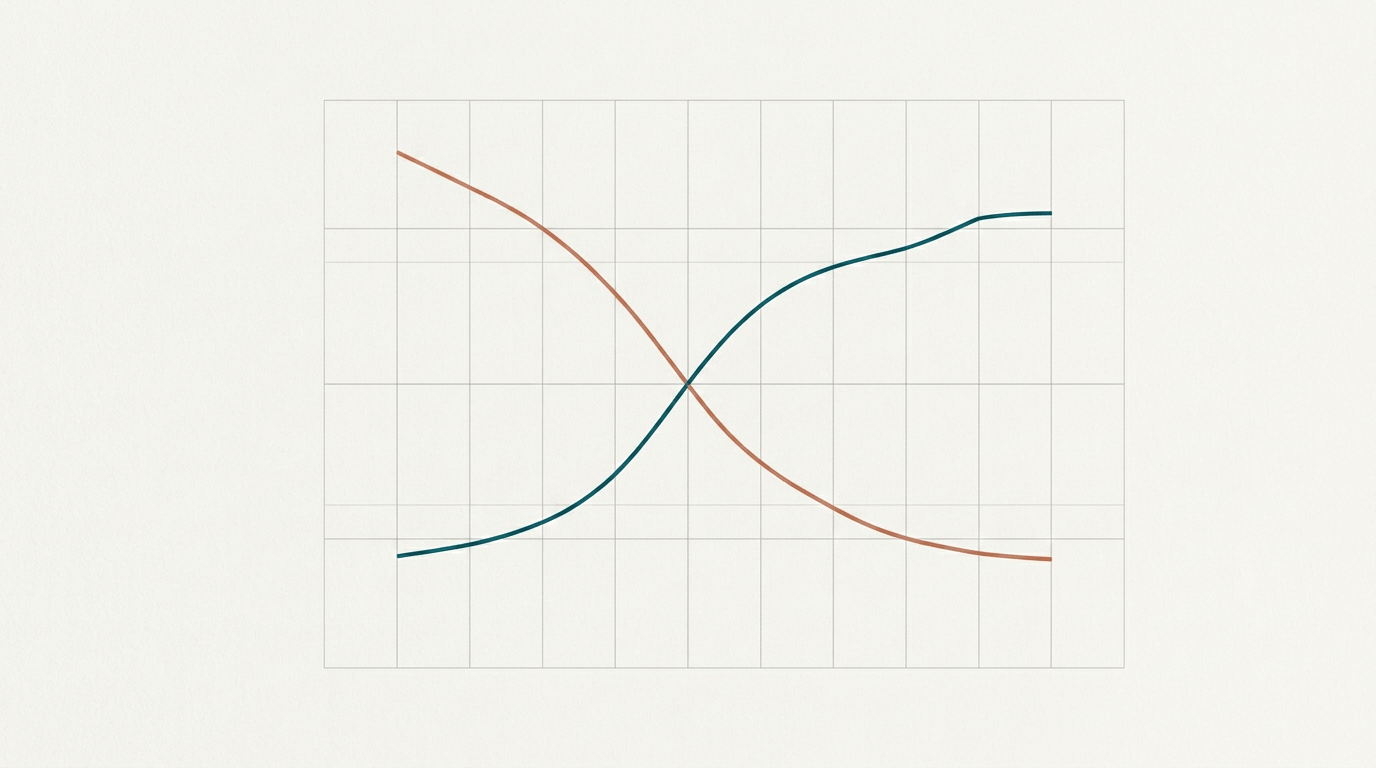
That gap — sales down, prices still up — is the classic pattern of a turning cycle, not a crash. It happens because supply stays scarce and expensive: ready-to-build land is limited, permits drag, financing is selective (sources: Brains Real Estate News; Infoconstrucción, 2025/2026). At the same time, many sellers now list around 42% above the eventual sale price — a gap that stalls deals (source: The Olive Press, Andalusia, 2026).
What the turn actually means for agencies
Translated into day-to-day terms, it means three things. First: fewer transactions mean tougher competition for every buyer. When the pie shrinks, it is no longer the market that decides who sells, but who is visible and convincing.
Second: the buyer is getting choosier, and wishful pricing no longer moves. That 42% gap between asking and sale price is, at heart, an expectations problem — and a property listed too high and presented poorly simply sits. In a market like this, professional marketing pays twice: it justifies the price and shortens time-to-sale.
Third: demand stays international. With foreign buyers accounting for around 34.8% of purchases, Málaga is one of Spain's most international provinces — and in some quarters of 2026 the figure peaked near 42.9% (sources: Registradores/idealista; Euroval, 2025/2026; methodology varies by period and basis). An agency that is not internationally visible — online, multilingual, with compelling visuals — loses exactly the well-funded segment that now makes the difference. In short: the problem is not the market, it is interchangeable marketing.
Five marketing levers for a turning market
In a rising market, almost everything sells itself. In a turning market, marketing quality separates itself from the average. These five levers will decide, in 2026, who gains share — and who waits on their listings.
Lever 1 – Visual quality beats volume. When every property found a buyer, quick phone snaps were enough. With a choosier buyer, seconds on the portal decide whether they click or scroll past. Professional photography, video and drone footage is therefore no longer optional — it is the foundation every other channel builds on, and a direct lever against long selling times. Our piece on how drone imagery helps sell faster shows just how much aerials move the needle.
Lever 2 – Enable the remote purchase: 360° tours and video. The international buyer shortlists online, often months before the first trip. A property without a virtual 360° tour drops out of that selection before they ever step inside. For northern-European and DACH buyers deciding from afar, the virtual viewing is what opens the door to an enquiry.
Lever 3 – Be multilingual and internationally visible. Spanish and English alone reach the fastest-growing groups only halfway. British buyers still lead foreign purchases (around 13.6% of all foreign purchases in Spain in Q1 2026), but German and Dutch buyers are visibly catching up (source: idealista, 2026). Presenting a property in the buyer's language and tone is not chasing a trend — it is securing a competitive edge. Our article on how to reach international buyers goes deeper on building that visibility systematically.
Lever 4 – Reach buyers where they already read. In a slower market, broad spraying is expensive and inefficient. Curated channels with exactly the right audience work better: the editorial Ideal Home magazine for international buyers on the Costa del Sol and, for the German-speaking market, the digital reach of Spanientrends. For agencies, these are not competing media — they are reach assets you can use to place your properties in front of a pre-qualified, ready-to-buy audience.
Lever 5 – Consistent brand and print as a trust anchor. In the premium segment, perceived quality carries across every touchpoint. A high-end brochure, a clean sign, a professional presence in a magazine — all of it signals credibility before a word is read. Precisely when buyers hesitate, perceived quality is what builds the trust that turns into enquiries.

Ahead of the competition — act now, while others wait
Market turns separate two kinds of players. Some cut spending and wait for "the market to pick up again." Others use the quieter phase to sharpen their marketing — and gain share precisely when competitors economise. Investing counter-cyclically in a turning market is not bravado but simple maths: visibility is cheaper to secure while others retreat, and it pays off the moment the few active buyers decide.
A quick self-check often does the job: is every one of your properties online with professional images and — where it makes sense — a virtual tour? Do you reach buyers in their language, not just in Spanish? Are your properties present where international prospects look during their research? And does your presence feel consistent across every channel? Wherever you answer "no" three or more times, that is your biggest lever for the second half of 2026.
Note: this article frames the market and is not investment advice. Buying or selling decisions should be assessed professionally against individual circumstances.
Stay close to the market — and adapt your marketing
Keep up with the market and marketing trends: sign up for our newsletter for regular, well-grounded market and marketing updates for the Costa del Sol.
Set up your marketing for a turning market: contact ADS Marketing — we combine market knowledge, visual production and a reach network that reaches exactly the international buyers now being fought over.