British estate agents have long understood print. The glossy brochure, the property pages in the local paper, the window display on the high street – all of it said something about the agency, not just the houses. On the Costa del Sol, most of that has moved to the portals. Something has been lost along the way.
Picture an owner in Mijas inviting three agencies to value her villa. All three have portal listings, a tidy Instagram feed and a decent website. The valuations are close, the fees are close. As she shows them out, one of the three leaves a printed magazine on the table – the agency's name on the cover, its properties inside, and pages about the area her house is in.
Which one looks like the expert? Most people answer without hesitating.
There is a difference between paid credibility and earned credibility. An advert buys attention. A publication earns trust – and that is what real estate authority marketing is about. This article looks at why, what the research says, and which levers an agency on the coast can pull.
More competition, less difference
Málaga province is one of the most international property markets in Spain. In the second quarter of 2026, 37.01% of all home purchases were made by foreign buyers – second only to Alicante. For agencies, that means demanding clients who compare across borders and know what good service looks like in London, Stockholm or Oslo.
At the same time, agencies have never looked more alike. On the portals, every agency sits in the same grid: photos, price, three lines of copy, a logo in the corner. Buyers see properties; the agency behind them disappears. It is not unusual for the same villa to be listed by several agencies at once, sometimes with identical photos.
What this means for your marketing: visibility alone no longer sets you apart. If you appear wherever everyone else appears, you are present but not recognised. What makes the difference is what an agency shows – not just where it shows up.
Advertising claims, publishing proves
How people judge a provider's competence before hiring them has been studied closely, mainly in business-to-business buying. Every year, Edelman and LinkedIn survey decision-makers, and the findings are clear:
73%
trust published expertise more than marketing materials
53%
care less about brand recognition when the content is strong
79%
are more likely to back a provider that publishes regularly
Source: Edelman and LinkedIn, B2B Thought Leadership Impact Report 2024 and 2025
- 73% say a company's published expertise is a more trustworthy basis for judging its capabilities than its marketing materials (2024 study, around 3,500 respondents).
- 53% say that if a company produces high-quality content, it matters much less to them how well known it is (2025 study).
- 79% are more likely to back a provider in a selection process if it consistently publishes high-quality content (2025 study).
These figures come from corporate purchasing, not property. The mechanism carries over all the same. An owner choosing an agency to sell her home faces exactly the question a procurement director does – who do I trust with this? – and answers it the same way. She believes what she can check for herself over what she is promised.

What this means for your marketing: an advert says "we're good". A publication shows judgement, market knowledge and staying power, and lets the reader draw their own conclusions. The second finding matters most for independent agencies: publishing strong content closes part of the gap with bigger, better-known brands.
What your own magazine signals
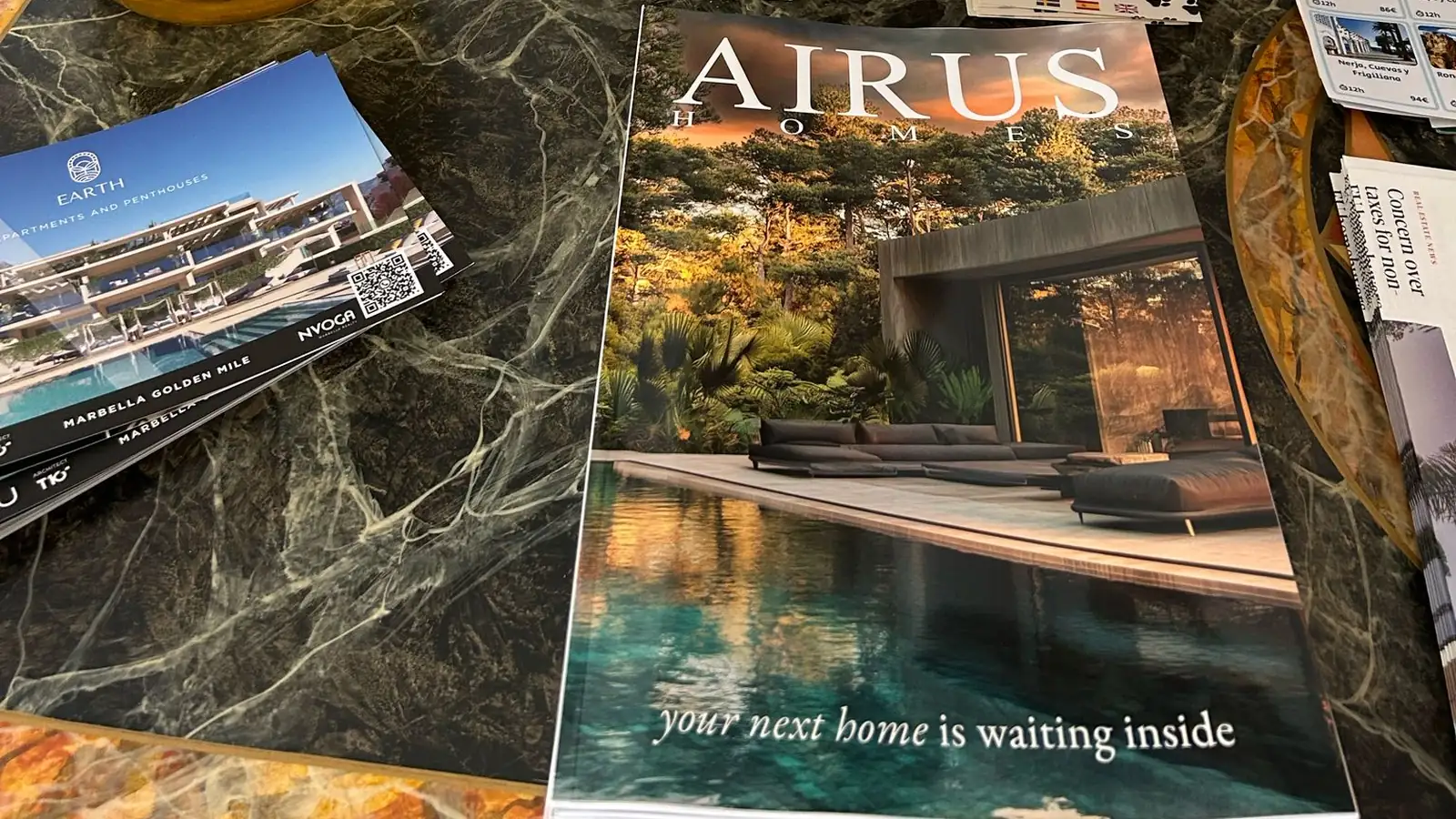
A magazine with your name on it is the most tangible form of publishing. It sends four signals an advert cannot.
Judgement. A magazine doesn't show everything; it shows a selection. Curating demonstrates judgement – exactly what an owner looks for in an agency.
Staying power. An edition that comes out regularly proves the agency is here to stay. On a coast where agencies come and go, that counts.
Local knowledge. Pages about your area – how it is changing, what makes it different – are knowledge. An advert can claim it; a magazine demonstrates it.
Presence. The magazine sits in your office, at the valuation, in the hotels, restaurants and golf clubs of your area. People pick it up and leave it on the coffee table. A portal listing is gone with the next scroll.
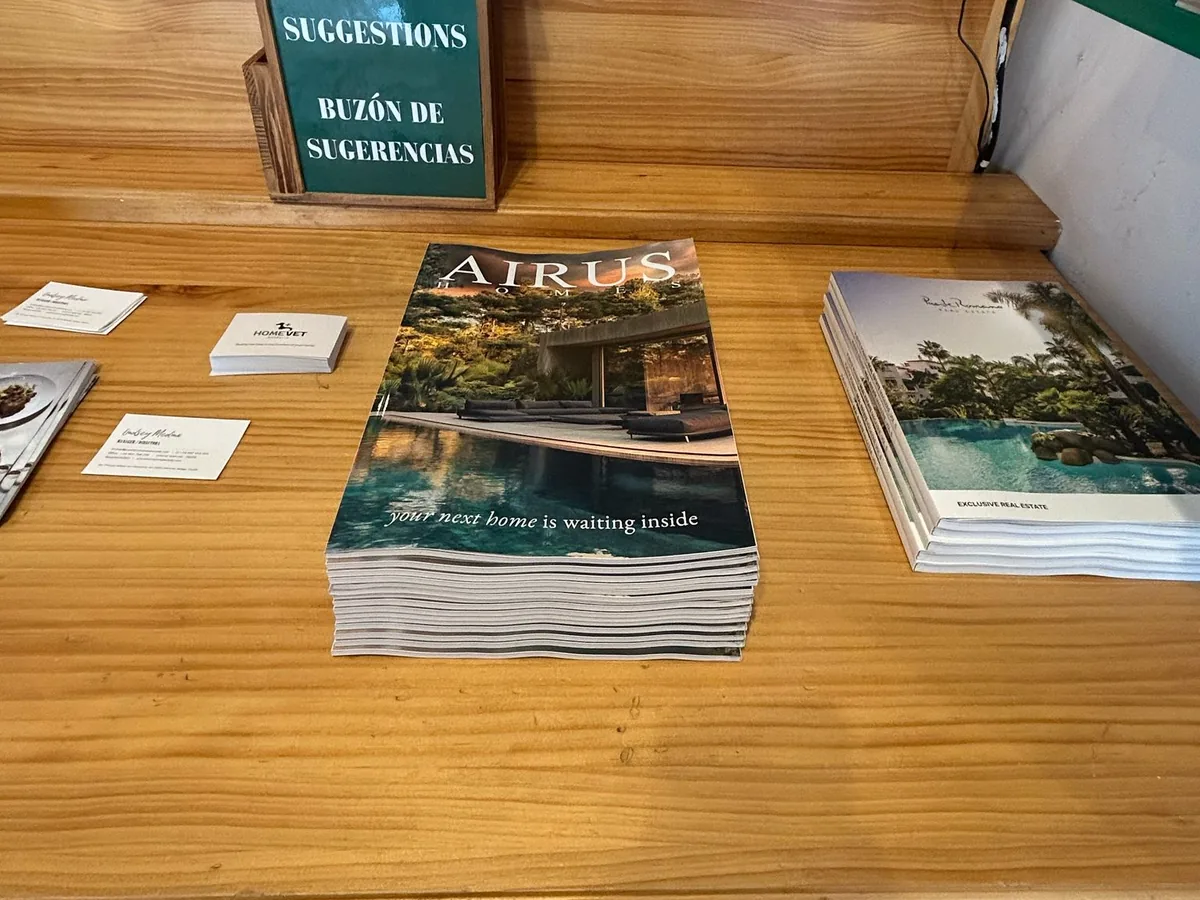
How print and digital work together in property marketing is covered in more depth in our guide to the real estate magazine in Spain.
Five levers for estate agencies
1. Take the magazine to the valuation
The strongest use of a magazine isn't the display stand – it's the owner's dining table. Bring an edition in which comparable homes are presented editorially, and the owner sees how her own property would be marketed. The magazine becomes a tool for winning instructions, not just a showcase for the stock you already have.
2. Present properties as editorial
Large photographs, one clear sentence on the location, the essential facts. No advert blocks with ten photos and capital letters. A property that looks like an article is read like one – more closely, and for longer.
3. Fill your own pages with knowledge
Your cover and agency pages are what make you the expert. A portrait of your area, a short read on the market, the team with names, faces and languages. These are the pages an owner reads before deciding whom to call.
4. Extend the life of the digital edition
Every printed edition has a digital version. Put it in your email signature, in WhatsApp messages to buyers and in your social posts. QR codes in the magazine lead straight to 360° virtual tours. That way the magazine keeps working where the paper copy isn't. More on virtual magazines.
5. Consistency over size
A one-off prestige edition impresses once. Three editions a year build recognition. A magazine's impact doesn't come from the thickness of one issue but from its regularity.
Why shared production makes it affordable
Publishing a magazine alone is too expensive for most agencies: editorial, design, print and distribution cost more than a normal marketing budget allows. So many go without – and leave expert status to a handful of large firms.
There is another way. With the Agency Magazine, several agencies share production and distribution. Each gets its own cover and its own pages with its properties; the inner section is shared. Depending on the package, your area is exclusive, so no other agency hands out the same magazine on your patch. The concept has run since 2008: more than 60 editions, three a year, with up to 14 participating agencies.
The result: your agency publishes its own magazine for a fraction of the cost of going it alone.
Conclusion
Portals, social media and a website remain the basic kit of every agency. They make sure you are found. Whether you are seen as the expert is decided elsewhere – wherever you show what you know and what you choose. An agency that publishes is read differently from one that advertises.
The next edition of the Agency Magazine comes out in early December; the editorial deadline is 15 November.
Is your area still available?
The Agency Magazine takes up to 14 agencies. The editorial deadline for the December edition is 15 November.
Check availability in my areaPrefer to stay informed first? Subscribe to our newsletter below: monthly marketing news from and for the Costa del Sol property community.