Property photography is changing on several fronts at once. AI can now furnish an empty room in seconds, regulators have started asking for labels, and the listing video has turned vertical. For agencies on the Costa del Sol, none of this is abstract.
The stakes are high. In Málaga province, 37.01% of home purchases in the second quarter of 2026 went to foreign buyers – more than one in three. Most of them shortlist from abroad, and they shortlist on images. In the United States, 81% of buyers rate photos as the most useful part of a listing, ahead of the property description itself.
Here are seven real estate photography trends heading into 2027, and what each one means for the way your agency markets property.
1. Authenticity becomes a requirement: AI editing and labelling
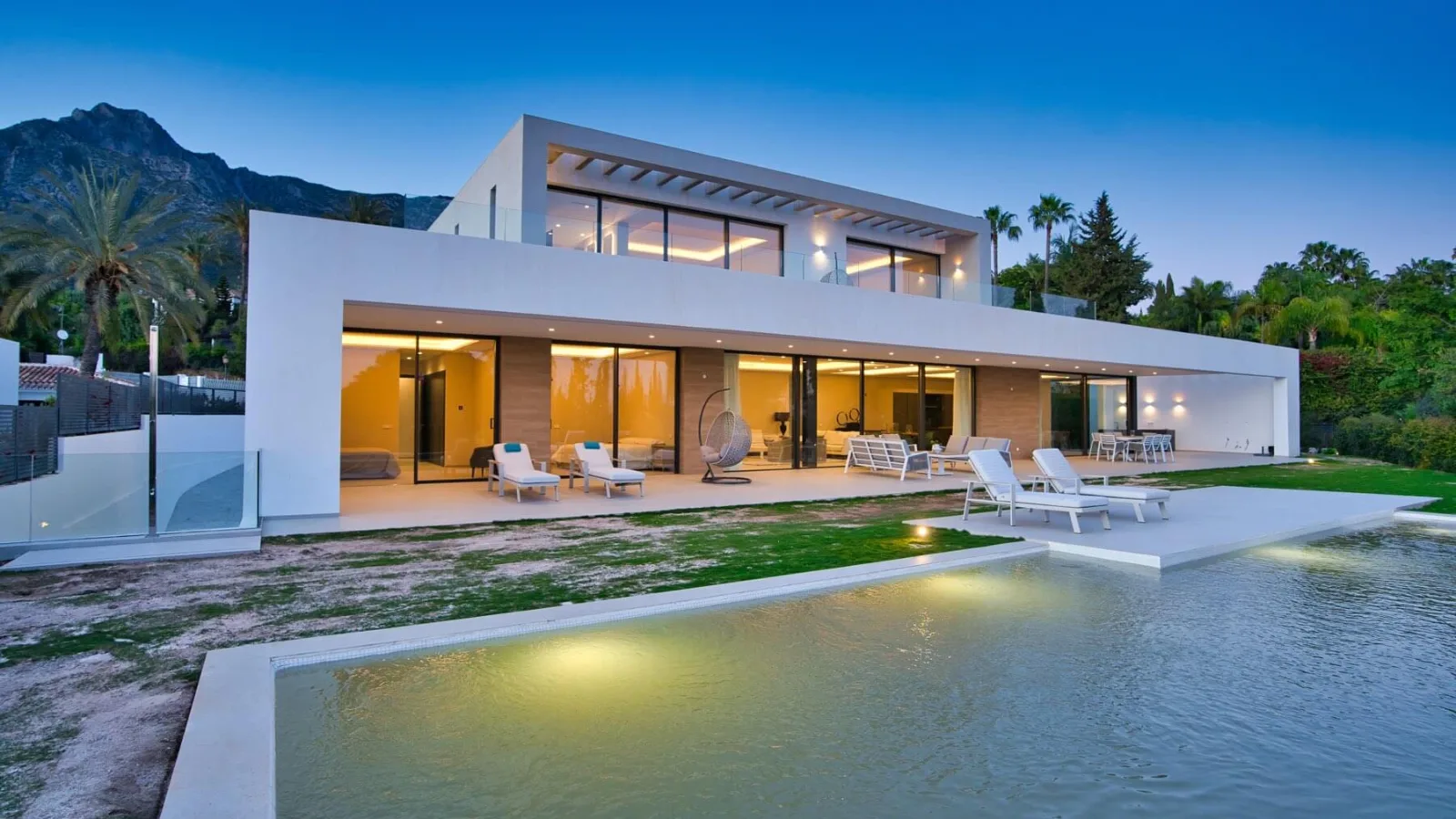
Swap the sky, stage the lounge, remove the crack in the wall: with AI tools it takes seconds. That is exactly why lawmakers and buyers are now paying attention.
Since 2 August 2026, Article 50 of the EU AI Act has applied. Anyone using an AI system to generate or alter images that resemble real people, objects or places, and that would falsely appear authentic, must disclose that the content is artificially generated or manipulated. The Act calls this a "deep fake", and the term is broader than it sounds: under the European Commission's draft guidelines, buildings and real places can be covered too. A photorealistic sofa dropped into a real living room is no longer just a matter of taste.
California shows where this is heading. Since 1 January 2026, agents there must label every digitally altered listing photo and give buyers access to the original. Adjusting exposure, white balance or cropping doesn't count. Greening the lawn, removing cables or furnishing rooms does.
Correction or alteration?
Correction
- Exposure and brightness
- White balance and true colour
- Cropping and straightening
- Lens correction
→ No label needed
Alteration
- Replacing the sky
- Adding furniture (virtual staging)
- Removing defects, cables or objects
- “Improving” the lawn or pool
→ Label on the image, keep the original
Guidance based on Article 50 of the EU AI Act and California’s AB 723; not legal advice. As of October 2026.
What this means for your marketing: set a simple editing policy that separates correction from alteration. Always label virtual staging on the image itself, keep the originals, and agree with your photographer in advance which edits they make. Whether a specific image falls under the rules depends on the case (as of October 2026); if in doubt, take legal advice.
2. Video first – and vertical
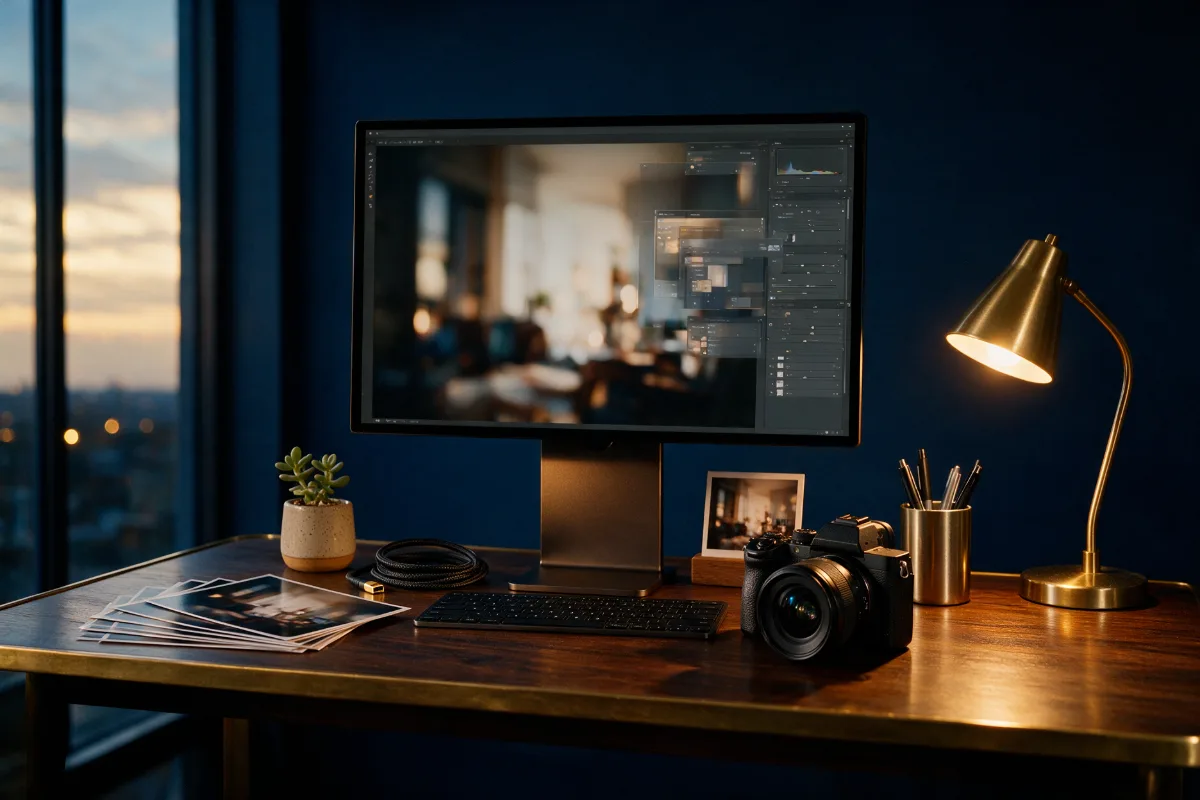
For a buyer 2,000 kilometres away, video stands in for the first viewing. It shows how the rooms connect, how the light falls and how far the beach really is. A photo shows a room; a video shows a home.
That video is increasingly watched upright: on Instagram, TikTok, YouTube Shorts and WhatsApp status. Crop a landscape film to portrait afterwards and half the room disappears.
What this means for your marketing: have every shoot capture vertical footage as standard. Plan two cuts: a 15–30-second clip for social media and a longer version for the portal and your website. We break down the budget in our guide to real estate video costs in Spain.
3. Drones: legal, and with context
On the Costa del Sol, aerial shots are close to standard. The airspace, though, is tightly regulated: Málaga airport, helipads, protected zones. Since 25 June 2024, Royal Decree 517/2024 has governed civil drone use in Spain. Flying in built-up areas requires prior notification to the Ministry of the Interior, and there are distance rules around aerodromes and helipads.
For an agency this is not a formality. If an operator flies without registration or insurance, that is a risk for the agency that hired them too.
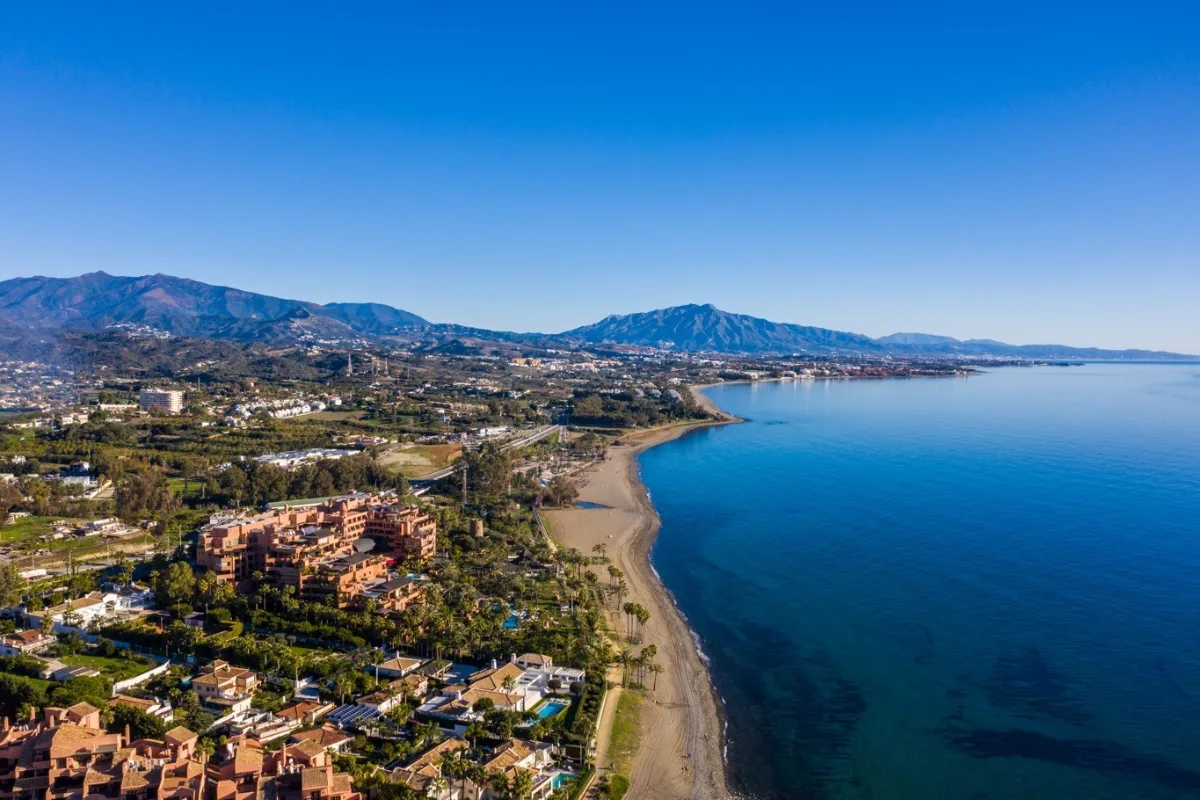
What this means for your marketing: only hire registered, insured operators, and ask to see the paperwork. And ask for aerials with context: the property's relationship to the sea, the golf course, the town. A shot of the roof sells nothing. More in our article on real estate drone photography.
4. A recognisable visual style for your agency
On the portals, every listing looks the same: cover photo, price, three lines of text. Standing out takes more than one good photo. It takes a visual style people recognise – the same colour palette, the same angles, the same image order, from a studio flat to a villa.
Buyers notice, even if they don't think about it. An agency whose listings are consistently bright, calm and well ordered comes across as careful. One with uneven quality looks random, even when some properties are beautifully shot.
What this means for your marketing: write your image standard down: colour palette, must-have shots, image order and how you choose the cover photo. Work with one photographer, or brief every photographer you use with these rules.
5. Light and outdoor living sell
On the Costa del Sol, many buyers aren't buying square metres; they are buying a way of life. The terrace at sunset, the pool with a sea view, breakfast outside in February. The images that capture this don't happen by chance. They depend on light.
Twilight shots with a lit pool and warmly lit interiors are now expected at the top end. But timing matters for simpler properties too: a west-facing terrace belongs in afternoon light, an east-facing balcony in the morning.
What this means for your marketing: schedule shoots around the light, not the diary. Prepare outdoor spaces as carefully as interiors. And make a twilight set standard above a certain price point. See how we do it in practice on our page on real estate photography in Marbella.
6. 360° tours and floor plans as proof
The further away the buyer, the more it matters that the photo delivers what it promises. An extreme wide angle makes a bedroom look bigger than it is. At the viewing comes the disappointment, and with it distrust of everything else in the listing.
360° tours and floor plans prevent that. They show how the rooms connect and let buyers check for themselves. Buyers who research thoroughly before flying out, as many Scandinavian and British buyers do, value that.
What this means for your marketing: use wide angles with restraint. Above a set price point, always offer a 360° tour or at least a floor plan. Why buyers now expect this is covered in our article on 360° virtual tours.
7. One shoot, many channels
The same images now end up on the portal, your website, Instagram, the brochure and often a magazine. Each channel needs something different: portrait for social, landscape for the portal, high resolution for print.
Think about it only after the shoot and you end up cropping. Cropping costs quality and impact.
What this means for your marketing: before every shoot, draw up a shot list by channel. Have the key shots captured in both formats, and get print-ready files for brochures and advertising – for example in the Ideal Home magazine.
Checklist: your image standard for 2027
- A written editing policy: correct freely, label any alteration
- Virtual staging always labelled on the image, originals archived
- Vertical footage on every video shoot
- Two video cuts: short for social, long for portal and website
- Drones only with a registered, insured operator
- Aerials with context, not just the roof
- A visual style guide for every listing
- Shoots scheduled around the light
- A 360° tour or floor plan above a defined price point
- A shot list by channel before every shoot
Frequently asked questions
Do I have to label AI-edited property photos?
Since 2 August 2026, the EU AI Act requires disclosure when an image generated or altered with AI resembles real objects or places and would falsely appear authentic. Virtual staging or a replaced sky can fall under this; basic corrections such as exposure or white balance generally don't. For specific cases, take legal advice.
Is it allowed to replace the sky in property photos?
It isn't banned. But if AI is used and the result looks real, it should be labelled. And regardless of the law: a buyer who finds a different sky and a different garden at the viewing loses trust.
Do I need permission for drone photography in Spain?
The operator must be registered. Flights in built-up areas must be notified in advance to the Ministry of the Interior, and extra rules apply around aerodromes and helipads. As an agency, ask to see proof of registration and insurance before you book.
Is video worth it for smaller properties?
Yes, if it suits the channel. A short vertical clip for social media costs far less than a full property film and reaches exactly the apartment buyers who otherwise just scroll through portals.
Conclusion
In 2027, good property photography isn't just attractive. It is honest, versatile and compliant. Agencies that protect the authenticity of their images, plan for vertical video from the start and keep a recognisable style will stand out on the portals and earn the trust of buyers who decide from a distance.
ADS Marketing has photographed property on the Costa del Sol since 2008 – around 5,000 properties to date. Photography, video, drone and 360° from one team.
Your image standard for 2027
Tell us about your next property. We plan photography, video, drone and 360° so every image works on every channel.
Request a quotePrefer to stay informed first? Subscribe to our newsletter below: marketing news from and for the Costa del Sol property community.
Sources
- Regulation (EU) 2024/1689 (AI Act), Articles 3 and 50
- Cooley — EU AI Act: Transparency Obligations Take Effect 2 August 2026
- Inman — California's new listing photo law (AB 723), 2026
- AESA — Royal Decree 517/2024
- Spanish Ministry of the Interior — notification of drone operations
- National Association of Realtors — 2025 Profile of Home Buyers and Sellers
- Colegio de Registradores — Estadística Registral Inmobiliaria, Q2 2026